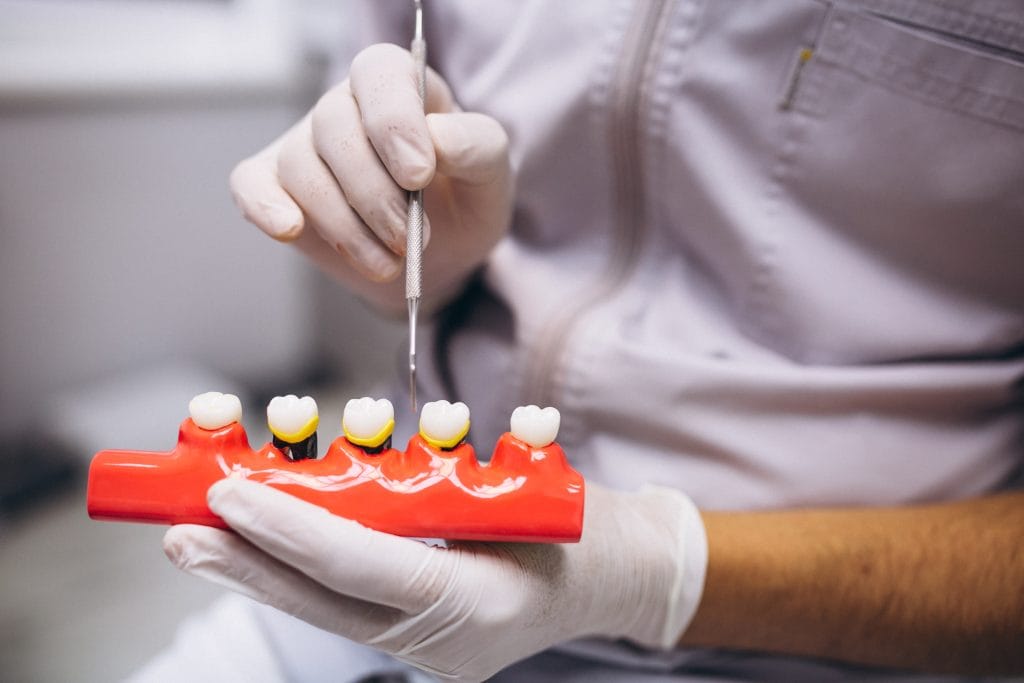
If your teeth are left unreplaced, even small gaps can gradually disrupt your bite and place added stress on the surrounding teeth and jaw. Over time, these changes may place added strain on surrounding teeth and the jaw, making timely tooth replacement necessary.
For many patients exploring dental implants in Williams Landing, the first question is how to restore function while ensuring long-term stability. Dental implants and dentures are common treatment options, but choosing the right one for you is important because they replace teeth in very different ways.
Implants are fixed in the jaw and help maintain bone structure and biting strength, while dentures are a removable option that can restore basic function. Understanding how each option affects jaw support and chewing efficiency is essential before moving forward.
Choosing the right approach is best done with professional guidance from a dentist who understands your oral health history and functional needs. A thorough assessment allows treatment to be tailored rather than generalised. Your Dental focuses on patient-specific planning, helping individuals make informed, clear decisions about tooth replacement.
Understanding Tooth Loss and Its Impact
The absence of one or more teeth can gradually affect how the mouth functions and how the jaw or soft tissues are supported. Here are some of the effects that explain why exploring appropriate tooth replacement options early is essential:
- Chewing and speech: Teeth work together to distribute biting force evenly, and when one is missing, this balance is disrupted. Chewing may become less efficient, placing extra strain on remaining teeth. Similarly, speech can be affected when airflow and tongue placement change around the gap.
- Facial structure and bone loss: Without a tooth in place, the bone beneath it can gradually reduce, and neighbouring teeth can move into this empty space. Timely solutions, including dentures or dental implants, help limit these long-term changes.
- Quality of life: Practical challenges, such as difficulty eating certain foods or adjusting speech, can affect everyday comfort. Over time, these functional limitations may affect social interactions, making dental care an essential part of daily well-being.
Delaying treatment allows your surrounding teeth to shift into empty spaces, increasing the risk of bite problems, food trapping and uneven wear. Addressing tooth loss early helps preserve oral function, maintain alignment, and reduce the likelihood of more complex dental issues in the future.
What Are Dental Implants?
Dental implants are a clinically proven solution for replacing missing teeth, replicating the structure and function of a natural tooth. They are placed into the jawbone and designed to provide long-term stability. This makes them a widely chosen option for patients seeking permanent tooth replacement under professional care.
A dental implant system consists of three parts:
- Implant screw: A titanium post placed into the jawbone
- Abutment: A connector that secures the restoration
- Crown: The visible tooth replacement designed for function
Implant screws integrate with the bone, allowing them to function similarly to natural teeth. Dental implants help maintain chewing efficiency and support jawbone health over time. A consultation with a dentist in Williams Landing allows patients to discuss dental implant costs tailored to their oral health needs.
What Are Dentures?
Dentures are removable dental appliances designed to replace missing teeth and restore everyday oral function. They remain a practical choice for patients seeking non-surgical tooth replacement options.
The three different types of dentures include:
- Full dentures: Replace all teeth in the upper or lower jaw
- Partial dentures: Fill gaps where some natural teeth remain
- Implant-supported dentures: Combine the stability of implants with the flexibility of removable prosthetics
Dentures help patients regain chewing ability and maintain bite alignment, offering a straightforward solution for missing teeth. They work by resting on the gums or being supported by the remaining teeth.
Dentures are often recommended for patients who have lost multiple teeth, have limited jawbone volume, or prefer a non-surgical route.
Dental Implants vs. Dentures: Key Differences
Here are some of the key differences between dental implants and dentures:
| Feature | Dental Implants | Dentures |
| Appearance and comfort | Implants are fixed into the jaw and feel stable and natural. | Dentures rest on the gums and may feel bulkier at first. |
| Stability while eating | They stay secure during chewing and speaking without movement. | Dentures can shift slightly and may require adhesive for stability. |
| Bone preservation | Implants stimulate the jawbone, helping maintain bone health. | Dentures do not provide bone stimulation, so resorption can occur. |
| Maintenance and daily care | They are cleaned like natural teeth with brushing, flossing, and regular check-ups. | Dentures must be brushed and removed before bed every night. |
| Longevity | With proper care, implants can last for decades. | Dentures typically need replacement or relining every few years. |
| Overall convenience | Implants function as a permanent solution without daily removal. | New dentures can take time to become comfortable, but they are easy to fit and faster to make |
Pros and Cons of Dental Implants
Dental implants are permanent tooth replacements that function like natural teeth and support long-term oral health. They are suitable for patients seeking a stable, durable solution that preserves jawbone and overall oral function.
Pros:
- Dental implants look and feel like natural teeth.
- They provide a long-lasting solution with proper care.
- Implants help preserve jawbone and prevent deterioration.
- They do not affect the health of nearby teeth.
- Implants restore chewing and speaking function effectively.
Cons:
- Dental implants have a higher upfront cost compared to dentures.
- They require sufficient jawbone density for successful placement.
- The treatment process takes longer to complete.
Pros and Cons of Dentures
Dentures are removable tooth replacements that restore chewing and speech function for patients with multiple missing teeth. They provide a practical, non-surgical solution for those seeking to replace many teeth promptly.
Pros:
- Dentures are generally more affordable upfront than implants.
- The process is generally faster than a fixed-tooth replacement option
- Dentures are suitable for replacing multiple or all teeth.
- They offer a non-surgical option for tooth replacement.
- Dentures can be adjusted or relined for comfort over time.
Cons:
- Dentures can shift or loosen while eating or speaking.
- They require daily removal before bedtime and thorough cleaning.
- Long-term use may contribute to gradual jawbone loss.
Cost Comparison: Implants vs. Dentures in Williams Landing
Cost is often one of the first things you consider when deciding between dental implants and dentures, though it can vary depending on your individual needs. Dental implants typically require a higher upfront investment due to the materials used and the surgical procedure, while dentures are often more affordable initially.
Your overall cost will depend on factors such as:
- How many teeth do you need to replace
- The type of denture (full, partial, or implant-supported)
- Materials used
- Additional procedures, such as extractions or bone grafts
At Your Dental in Williams Landing, we work with you and can discuss flexible payment options to make both implants and dentures more manageable for your budget. Our on-site health fund processing through HICAPS, and personalised treatment plans allow you to spread the cost over time.
You can get a treatment plan that fits your oral health needs and works within your budget, helping you choose the solution that’s right for you.
Which Option Is Right for You?
Choosing between dental implants and dentures is a personal decision based on several key factors. Understanding how each applies to your situation can help you make an informed decision with guidance from a trusted dentist in Williams Landing.
- Age and lifestyle
Your daily routine and long-term activity level help determine the most suitable option. If you lead an active lifestyle and are looking for a long-term solution that functions like natural teeth, implants may be a better fit for your needs.
Dentures, on the other hand, can suit those who prefer a non-surgical approach or want a quicker replacement solution.
- Bone health
A healthy jawbone is essential for supporting dental implants, as they are placed directly into the bone to provide strength and stability. If bone density has reduced over time, additional procedures may be needed before implant placement.
Dentures can often be provided even with bone loss, making them a practical option when implants may not be immediately suitable.
- Budget considerations
Your budget is an important factor when weighing your options. Dental implants typically involve a higher initial cost due to their surgical placement and materials, while dentures are generally more affordable upfront.
Discussing costs openly with your dentist allows you to explore suitable solutions and available payment options without compromising essential oral function.
- Long-term goals
Thinking about your long-term oral health can help clarify your decision. Implants are designed as a durable, long-term tooth replacement that supports chewing efficiency and jawbone health. Dentures may require adjustments or replacement over time, which is worth considering if you are planning for the years ahead.
Why Choose Your Dental for Tooth Replacement in Williams Landing
At Your Dental, we focus on providing reliable, evidence-based tooth replacement care tailored to each patient’s needs. Our approach combines clinical experience, careful planning, and modern techniques to support long-term oral function, whether you are considering dental implants or dentures. We take the time to understand your goals and guide you through every stage of treatment with clarity and care.
Here’s why you can consider choosing Your Dental:
- Experience in providing dental implants and dentures
- Personalised treatment planning for individual needs
- Use of modern dental technology
- Patient-centred approach focused on comfort and communication
- Conveniently located dental clinic in Williams Landing
If you are considering tooth replacement and want professional guidance, book a consultation with Your Dental in Williams Landing. Our team is here to assess your oral health, discuss your options, and help you choose a solution that supports your long-term dental wellbeing.
Conclusion
Tooth replacement is a long-term decision that influences how you eat, speak, and maintain oral stability over time. Rather than focusing on a single treatment, the right choice is based on understanding how each option supports your jaw, comfort, and daily function as your needs change.
A personalised consultation at Your Dental in Williams Landing allows you to explore these options with clear, professional guidance. Our dentists thoroughly examine your oral health and help you choose a solution that suits your lifestyle.
Frequently Asked Questions
Are dental implants painful?
Most patients do not experience pain during the dental implant procedure. The area is numbed with local anaesthetic, which keeps you comfortable throughout treatment. Some mild soreness or swelling may occur afterwards, but it is usually temporary and manageable with over-the-counter pain relief.
Can dentures look natural?
Yes, well-designed dentures can look very natural. They are designed to match the shape and colour of your existing teeth. When fitted properly, dentures can restore function while blending in naturally.
How long do implants last?
Dental implants are designed as a long-term solution. With good oral hygiene and regular dental check-ups, they can last for many years. In many cases, implants continue to function well for decades.
Can dentures be upgraded to implants later?
In many cases, dentures can be replaced with dental implants later. This depends on your bone health and overall dental condition. Our dentist will assess your mouth to determine whether a dental implants is suitable for you.
Is tooth replacement covered by health funds?
Some private health funds may contribute to the cost of dentures under extras cover. Dental implants may be covered in part or not at all, depending on your policy. It is always best to check with your health fund to understand your benefits and waiting periods.